Upcoming Events
-
Pup Pop Up at Mutts & Co.

(May 30, 2026 11:00 am) -
WOOF, WAG, AND WINE TRAIL - Starts Today
(June 01, 2026 12:00 pm) -
Foster Meeting
(June 10, 2026 7:00 pm) -
Membership meeting
(June 13, 2026 11:00 am)
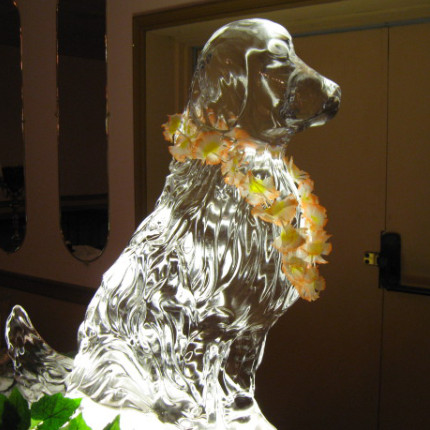
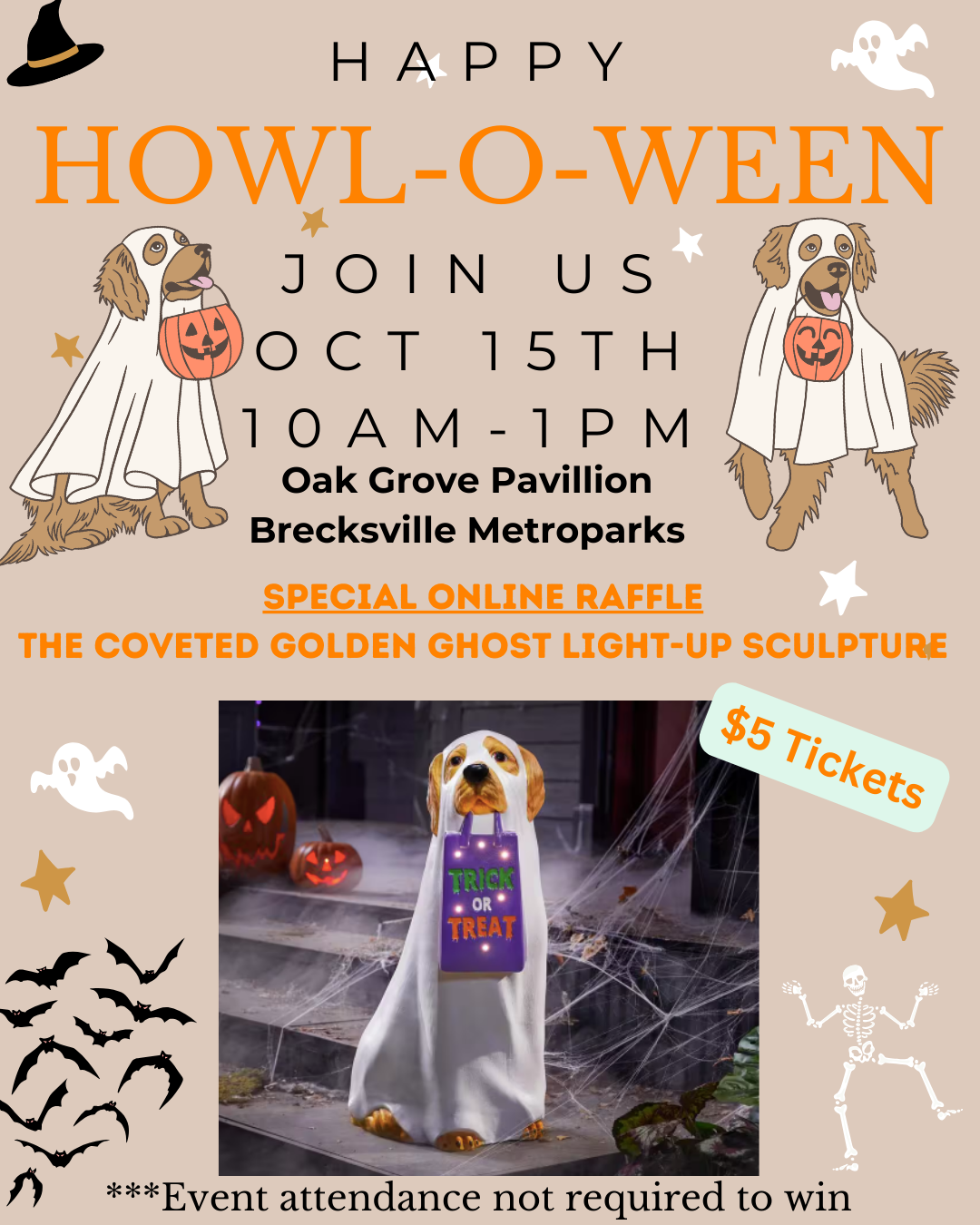
Golden Ghost Raffle
Five dollar raffle tickets are now on sale for a chance to win this Golden Ghost. Click HERE to purchase tickets. Winner will be announced via FB live at this year’s Howl-o-Ween Pawty on October 15th. Winner need not be present to win.
A Home for Every Golden Retriever
A HOME FOR EVERY GOLDEN RETRIEVER
If you’re on a stroll in your neighborhood and encounter a gregarious Golden Retriever who wants to say hello, it’s possible your new friend is an alumnus of GRIN – Golden Retrievers in Need Rescue Service. Founded in 1992 by a group of Golden enthusiasts, GRIN is a non-profit 501(c)(3) organization on a mission to find good homes for the countless Goldens facing euthanasia and homelessness each year. GRIN has found homes for over 4,500 dogs throughout Northeast/Central Ohio, Western Pennsylvania and right here in Gates Mills. Two-time GRIN adopter and Gates Mills resident Ingrid Ruppe has had Goldens for over 30 years and considers the breed “pure sunshine.” After working with GRIN to adopt Daisy and Stanley, Ingrid is fully committed to the breed, to rescue and says that any future dogs that become a part of her family will be rescue dogs.
Without a bricks-and-mortar presence, GRIN mobilizes its all-volunteer team to save the lives of Golden Retrievers. Here’s how the process works. Once GRIN becomes aware of a dog in need, a volunteer transporter picks up the dog and takes it to a vet partner for evaluation and treatment. Increasingly, dogs come in with medical issues, GRIN spends on average over $1,200 per dog. While the dog is receiving veterinary care, the foster team works to match it with a foster family. Each dog spends several weeks in a foster home receiving the love and care that helps them overcome any medical or behavioral issues. Dogs with behavioral issues work with professional behaviorists and trainers to ensure they reach their full potential and adoptability. The foster family is an essential part of the adoption process, helping GRIN understand the needs of the dog and what type of adoptive home will be the best fit. Using this knowledge, the adoption team matches the dog with a suitable adopter and conducts a meet-and-greet with the potential adoptive family and the dog. If all goes well, this lucky Golden Retriever moves into its “furever” home. Amora, who was an unclaimed stray at a shelter in Lorain County is just one example of a lucky dog that experienced this process. This golden girl came to GRIN extremely thin and with skin issues and is now the sweetest and goofiest gal who loves napping in the sun and chasing squirrels.
The demand for GRIN’s services has exploded, with the number of dogs placed increasing 112% between 2021 and 2022. In 2022, GRIN rescued 473 dogs with over $321,000 spent in vet bills. The reasons for this exponential growth are the pandemic and puppy mills, according to Lisa Kime, president of GRIN’s board of trustees. Lisa tells us, “Looking for home companionship during the pandemic, many families added a puppy and the demand for these dogs was largely met by puppy mills, which are all too prevalent in Ohio. With the return to in-person work in 2022, many dogs became a lower priority for some families and shelters were flooded with abandoned dogs. Additionally, as demand plummeted, puppy mills started to divest of breeding dogs and unsellable puppies. GRIN stepped in to rescue the impacted Golden Retrievers. With the sluggish economy and inflationary pressures in 2023, owner relinquishments continue to surge, and GRIN is on track for another record-setting year of intakes.” Casey is one of many breeding dogs who came to GRIN. At age five and after a lifetime of breeding in an Ohio puppy mill, she was relinquished to GRIN and was initially extremely shut down. In her adopted home, Casey has blossomed into a confident, trusting, and happy dog alongside her Golden brother, Willow.
The inflow of Golden Retrievers that need homes has no end in sight. Goldens like Lisa Kime’s Starr, who was relinquished by her previous owner when experiencing financial difficulties. GRIN remains committed to these dogs. Every Golden Retriever that comes into GRIN’s care needs a foster home and that is the most pressing issue that GRIN faces – the need to expand its pool of foster homes and adopters so that every abandoned dog has the chance to live the life it was born to live.
Written by GRIN volunteer: Lisa Corwin
This article was published in the May 2023 issue of Stroll Magazine. Link to the Stroll webpage: https://www.strollmag.com/locations/gates-mills-oh/.
Don't Lose Your Dog
Published by HARTT, Inc. (Humane Animal Rescue and Trapping Team) , a volunteer-based Arizona nonprofit organization that humanely captures lost family pets, homeless dogs, and homeless cats who are severely injured. https://azhartt.org/
Don’t Lose Your Dog! Tips for Dog Owners, Fosters and Adopters
Do you have a shy or nervous dog, a new foster or newly-adopted dog, or a dog who has recently been lost? These dogs should be considered as flight risks and tend to look for a way “out” when their environment changes. Perhaps they are in a new home, there are visitors in the home, or they’ve recently been through a scary situation. With new fosters or adopted dogs, transitions to a new place are scary and confusing and their instinct is often to look for a way to run or escape. Many are lost within the first 48 hours of arriving in their new home. Please review this document with everyone in your household, children, visitors, landscapers, etc.
New things, people and places can be scary
Your dog may have fears that seem irrational and even “silly”, but the simplest of things can cause extreme panic and fear in a shy or rescued dog. Certain sounds, smells, or sights can trigger an immediate fight-or-flight response. Some dogs may have had negative experiences with these items, or they may have simply never experienced them before; therefore, treat them as if these experiences are all new and could be scary! Common triggers include:
- • Sounds (the sounds of children playing, television, sirens, fireworks, kitchen appliances, snapping a plastic bag open, shaking out laundry, wind, thunder and lightning are common triggers)
- • Unfamiliar items (people wearing hats; sunglasses; using canes or walkers; carrying objects like rakes or baseball bats)
Some dogs won’t grow out of these fears quickly – it often takes months or years of slow, methodical and gentle desensitization for the dog to become less sensitive and reactive to these triggers.
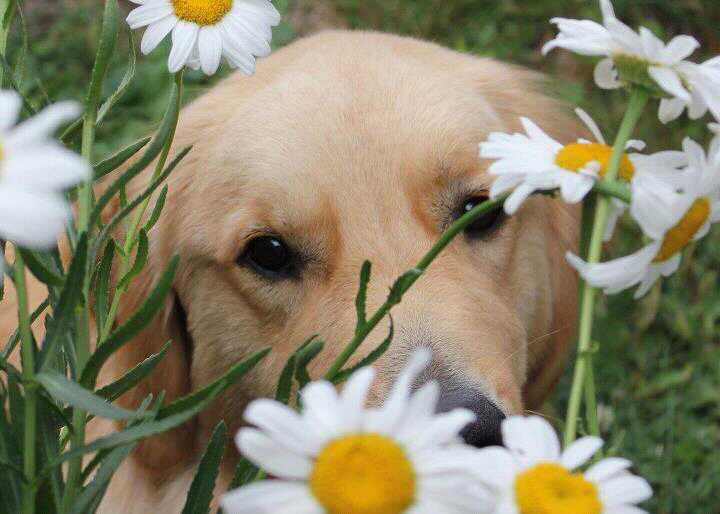
Sometimes being alone is more comfortable than being with people
Some shy or rescued dogs will often seek out a quiet spot where they can get away from everything and may always find comfort in having a private area. Allow your dog to have his/her space (under a table, in a bathroom), at least for the first few weeks, and allow him to come out when he is more comfortable. Sit at a distance, call him softly and try enticing him with a yummy treat.
Do not force yourself on the dog – close contact can be very scary at first. Make sure children know this too and allow your dog to keep his distance. If and when he does approach you, respond with “calm energy” and pet the dog, but don’t immediately expect your dog to cuddle, play ball or jump in your lap. It’s always best to wait and allow a shy or skittish dog to approach you first.
Cornering a shy or nervous dog can frighten them which might, while not common, cause the dog to snap at you or a child out of fear; it’s important to go slow and proceed at a pace that is comfortable for the dog. Your dog may initially bond with only ONE person – this is normal and doesn’t mean the other people have done anything wrong, or that the dog doesn’t “like” them!
We don’t always know why certain dogs are fearful or skittish
Don’t assume a shy dog was abused – in many cases, your dog may have just had limited interaction with people – they simply don’t know how to be “pets”. Or, perhaps they were lost and on their own for a while and will just need time to learn to relax again. Some may have never been part of a loving family. As a result, some of them have never even seen a leash before! Make sure collars are very snug and be sure to loosen them slightly as your dog grows in size. Ask your rescue organization or a dog trainer how to slowly teach a dog not to be scared of a leash, a little at a time.
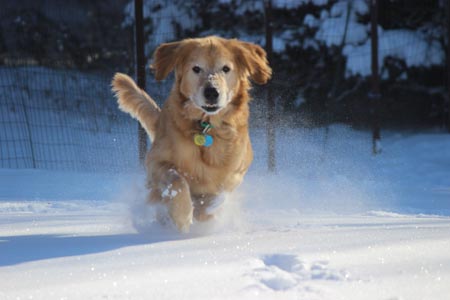 Shy, skittish and newly rescued dogs are EXTREME flight risks!!
This phase can take weeks, months or longer. For this reason, please take extreme precautions to make sure your dog cannot escape their home, yard, or car:
1. Is your fence dig-proof and jump-proof (including balconies)? Make sure there are no objects within 2’ of the fence; dogs will use these items to get up and over fences. Newly adopted rescue dogs should not be left alone on a balcony or in a back yard for at LEAST a month. Give them time to get comfortable and feel safe in their new home.
2. Lock all gates with a padlock to prevent wind, children or landscapers from opening while your dog is in the yard.
3. If service providers will be entering your home or yard, we strongly recommend keeping your dog crated (or in a secure room with the door closed) while strangers are moving about. Many people are not used to being careful with doors and gates.
4. When inside the home, we strongly recommend using a minimum of TWO BARRIERS between the dog and the outside world at all times. This could be:
a. A garage door, then a laundry room door
b. A front door, with the dog behind a baby gate in another room (baby gates should be sturdy; always observe a dog closely around a baby gate first to make sure he can’t jump on it and knock it over or jump over it).
Beware of securing a dog inside a room with an open window, with only a screen. Nervous dogs will push the screen out very easily and escape through the window. Remember, their fears are not rational, but they are very real.
Whenever a family member is about to leave the home, first check all doors and gates to make sure they are secure, and know where your dog is physically before leaving to make sure she doesn’t accidentally escape.
5. Many pets go missing when visitors come to the home. Keep your dog in a separate room, or on a leash, under your control, while having visitors over and ask them all to be careful with closing doors immediately behind them.
6. Don’t take your dog on walks, to dog parks or cafes, or take them off your property for any reason other than for veterinary care for a minimum of one month after arriving in the new home. They should become familiar with their home location through sight and smell, before risking an off-site trip. If you live in an apartment and must walk your dog for potty breaks, follow the other recommendations below.
7. ALWAYS keep a collar and current ID tag on your dog, 24/7, in case your dog escapes.
8. When the dog IS away from home, your dog will still be wearing her normal collar and ID tag. But also, please ADD a properly-fitted Martingale collar (see illustration) which does not allow a dog to back out if spooked – keep this special collar attached to the leash at all times and remove from dog when back home. Check collar fit while walking on leash inside your home or in your back yard first!!
9. Only adults should handle the leash – never children under 16 – and the handler should remain alert at all times.
10. We strongly recommend threading the “handle” of the leash through a securely clipped “waist leash” or securely-clipped belt (see illustration) so that if the handler becomes distracted or inadvertently drops the leash, the dog will still be attached to the person and can’t run away.
11. Never “tie out” a dog in your front yard, while camping, at a coffee shop, etc. –nervous dogs can chew through most leashes in seconds if they are frightened.
12. When transporting your dog in a car, we strongly recommend:
OPTION 1: Transport in a secure dog crate, with leash and Martingale collar attached. This is the safest and best choice! Make sure the gate is securely closed each time.
OPTION 2: If a crate is not possible, then ideally two people should be in the car with the dog, one driving and the other holding the leash (especially when car doors open!).
OPTION 3: If the above options are not possible, then attach your dog’s leash to her collar and leave about 12” dangling out the top of a ROLLED-UP window when the car door is shut. You can then get out of the car, close your door, walk to the door closest to your dog, grab the end of the leash firmly, and then open the door for your dog. Be ready for them to quickly jump out!
Make proper arrangements for your dog’s care in your absence
When you will be away, choose carefully who will care for your dog to make sure she is kept safe. Pet sitters, even “professional” ones, lose people’s pets often! Beware of using friends, adult children, untrained individuals, or people you’ve only met online or a dog walking app to care for a shy or rescued dog while you are away. Many dogs try to escape because they can’t find you.
We suggest using a professional boarding facility for your rescued or skittish dog when you will be away overnight or longer. Always tour the facility to assure that the fencing is escape proof, double gated and the staff are well-trained and compassionate.
 Your dog is dependent on you to keep her safe! If for any reason your dog gets out and becomes lost despite these efforts, notify your rescue organization IMMEDIATELY and visit www.azhartt.org for lost dog recovery tips.
© Copyright 2021 HARTT / www.azhartt.org / Shelters and rescue groups may freely use this document, with attribution to HARTT. V2101
NEW Grin Gear
We are thrilled to introduce our new online GRIN Gear merchandise store, your one-stop shop for custom GRIN gear! Our online store features a variety of designs, styles and colors available to suit your needs. The best part is orders are shipped directly to you and GRIN receives a portion of the proceeds! Two paws up!! We will be updating our site regularly to add designs inspired by the holidays, GRIN special events and more- so be sure and check back regularly for updated designs. A link to the store can be found here:
https://www.bonfire.com/store/grin-gear-1/
Puppy Mill Dogs
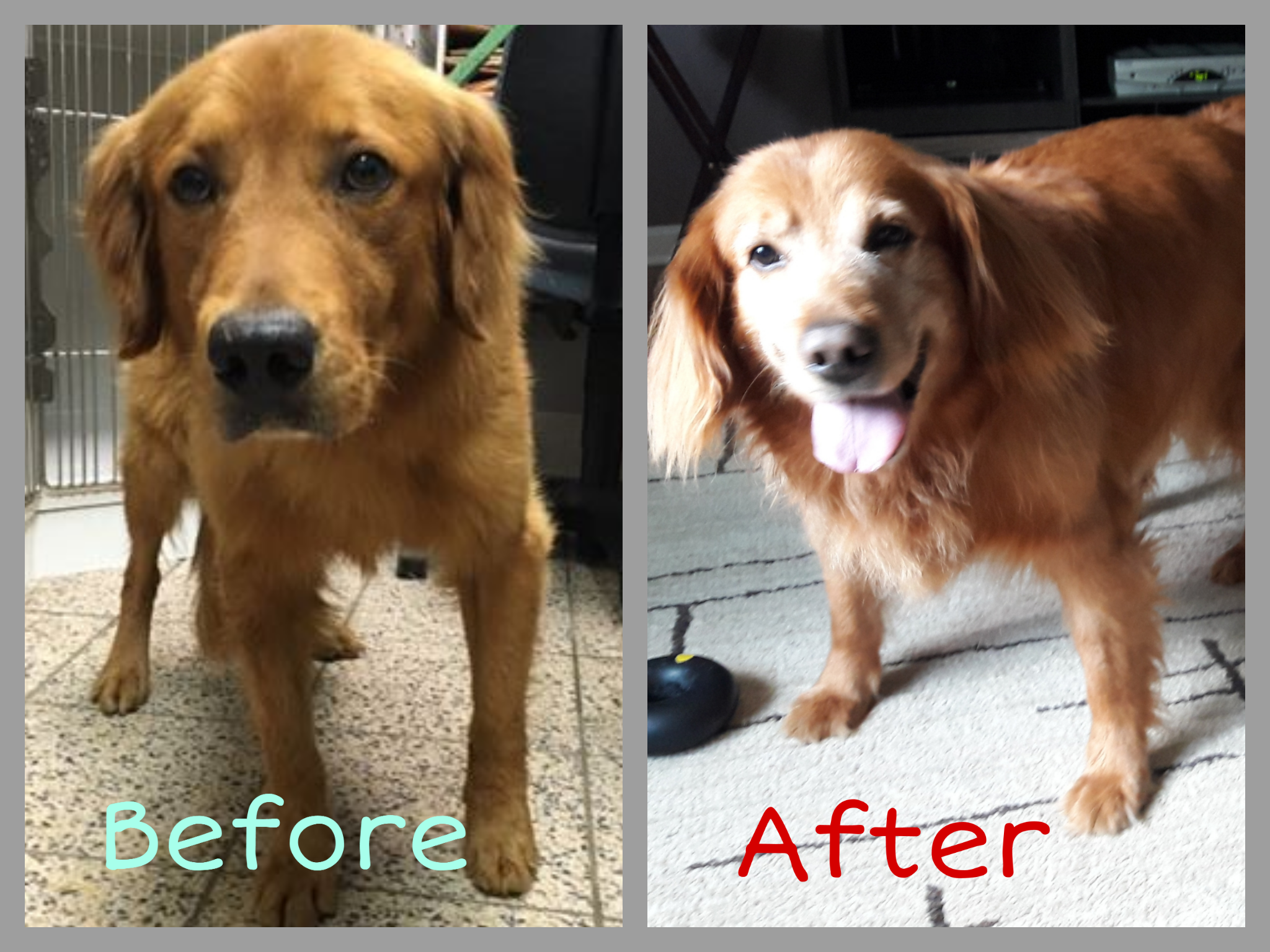
Over the past year GRIN has taken in an increased number of puppy mill dogs and as a result we are in need of appropriate foster/adoptive homes. The damage done during the years in the mill can be overcome, but it takes the right environment, time and dedication.
What we are looking for in a mill dog foster/adopter:
- a fenced yard with a traditional fence
- another well socialized dog in the home to give the dog confidence
- kind and patient adults
- quiet households with no young children
Things to think about when considering fostering/adopting a puppy mill dog:
- They may be frightened of collars or leashes
- Close management is necessary as they are considered a flight risk
- They may not be housebroken or they may hold their urine/feces for long periods of time upon arrival
- Some don’t know how to eat or drink out of a dog bowl
- Many of the dogs are hand shy or afraid of loud noises
- Some dogs will not make eye contact initially (submissive behavior)
- Many have never encountered stairs and will require coaxing to use them
- They are not comfortable initially riding in a car
- Most of the dogs have never walked on grass, tile, carpet, wood surfaces, etc
- They are not familiar with dog toys or beds
- They are not likely to initially take a treat or food from your hands
- They need time to decompress and learn how to be a dog!
We would love to say that every puppy mill survivor only needs love to turn it into a wonderful family pet, but that would be a lie. Love is definitely needed in large amounts, but so is patience. We are not trying to scare you but need folks who are applying to foster or adopt to understand these dogs need time and patience. They need to be allowed to decompress in a safe environment. These dogs are resilient and given the right environment they can become a loving member of your family.
Not being “up to it” is no crime, but you need to be honest with yourself, and us, about your expectations. These dogs have already been through more than their share of heartache and if your entire family is not willing to make the commitment, fostering or adopting a mill dog may not be for you. If you are up to the challenge it is a hugely rewarding experience!
These dogs are resillient and given the right environment can adjust to become a member of a loving patient family!
Page 2 of 3
Featured Story
What Sets Us Apart!
What are people saying?